Remote Cable Organizer Drone: How Tom TechBlog’s Smart Flyer Tames Messy Wires In 2026
Tom TechBlog introduces the remote cable organizer drone to solve home and office wire clutter. The remote cable organizer drone moves along ceilings and behind desks. It locates cables, grips them, and routes them into channels. The device reduces trips to ladders and limits manual cable handling. Readers learn how the device works, its limits, and what to check before buying.
Key Takeaways
- The remote cable organizer drone efficiently manages home and office cables by flying along ceilings and behind desks to grip and route wires, reducing clutter and safety hazards.
- This drone features steady flight with ultrasonic sensors, a soft pneumatic gripper to prevent cable damage, and an app interface allowing route mapping, speed adjustment, and manual overrides.
- Ideal for small apartments, home offices, and small shops, it is limited by payload capacity and struggles in very tight spaces or with thick power cables.
- Before purchasing, verify compatibility with your cable sizes, check battery life, and ensure access to replacement grippers and prop guards for sustained use.
- Operating the drone requires clear indoor spaces, attention to local drone regulations, and safety precautions to protect pets, children, and property.
- For simpler cable management needs or budgets, alternatives like motorized cable feeders or extendable poles offer cost-effective solutions compared to this advanced remote cable organizer drone.
Why Remote Cable Management Matters For Homes And Small Offices
Homes and small offices collect power cords and data cables quickly. Tangled cables cause trips, wear, and poor airflow for electronics. A remote cable organizer drone reduces these risks by moving cables into tidy runs. The drone saves time for people who do not want to climb ladders or hire technicians. It also creates safer workspaces for families and local businesses. Tom TechBlog shows how a focused device can replace tabletop cable ties and manual routing for many everyday jobs.
Meet The Remote Cable Organizer Drone: Key Features And Specs
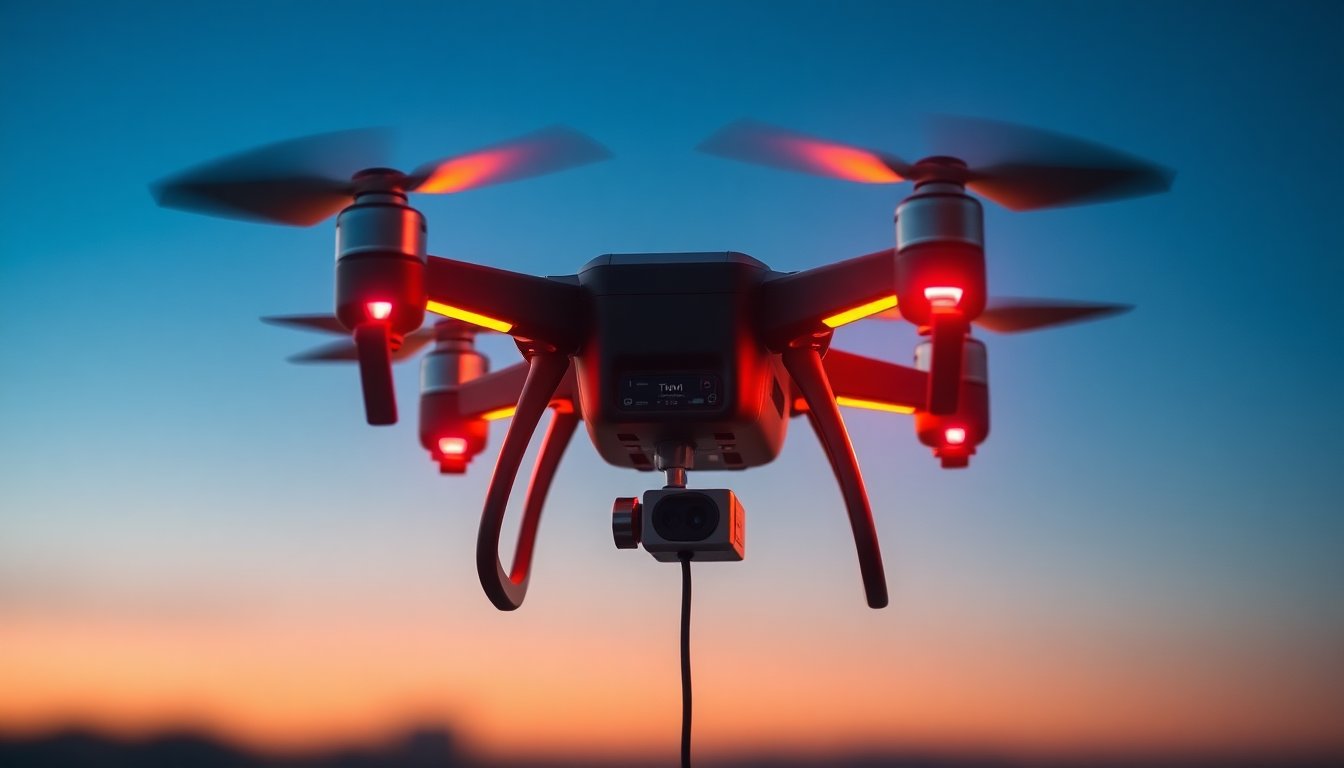
Tom TechBlog reviews the smart flyer with a short spec list. The remote cable organizer drone weighs about 280 grams and runs on a 40-minute battery. It pairs to an app over Wi-Fi and Bluetooth. The drone supports cable diameters from 1 mm to 8 mm. It carries minor connectors and a light payload for small clips. The device offers adjustable speed and a calibration mode for fragile runs. Tom TechBlog notes the included safety prop guards and a soft gripper that reduces cable damage.
Hardware Design And Flight Stability
The drone uses four small rotors and a gyro for steady flight. The frame sits low to reduce sway. The remote cable organizer drone senses distance to surfaces with ultrasonic sensors. The device limits tilt when it carries a cable. The firmware applies slow, steady corrections for stable routing. Tom TechBlog found the unit held steady at slow speeds in tests. Users can lock altitude and speed in the app to keep the drone steady near beams and shelves.
Cable Gripping, Routing, And Safety Mechanisms
A soft, pneumatic gripper secures cables without pinching. The gripper opens and closes on command. The remote cable organizer drone feeds cables through a small guide to align them with mounts. The guide reduces snagging on corners. The drone includes an automatic release if it senses excessive tension. The app sends alerts for errors and suggests manual rescue procedures. Tom TechBlog highlights the physical guard that prevents prop contact with wires and people.
How It Works: Setup, Operation, And Typical Tasks
Owners unpack the drone and charge the battery. They run a short calibration routine in the app. The remote cable organizer drone maps a small area with a quick flight. Users then mark start and end points in the app. The drone flies the route, grips the cable, and pulls or pushes the cable into place. Typical tasks include routing TV cables behind stands, moving router lines along baseboards, and reorganizing desk clusters. The device logs each job so users can repeat successful routes easily.
Use Cases, Limitations, And Indoor Safety Considerations
Small apartments and home offices gain the most from this device. Facilities teams in small shops can use it for quick rewires. The drone cannot handle heavy bundles or thick power feeds. It also struggles in very tight ceiling cavities. Users should avoid operating near open water or near active HVAC intakes. People must secure loose items and clear rooms before flight. Children and pets should leave the area. Tom TechBlog stresses that insurance and local rules may restrict indoor drone use in some buildings.
Buying Guide: What To Look For And Practical Alternatives
Buyers should check payload rating, gripper type, and battery life. Verify that the remote cable organizer drone supports the cable sizes you use. Look for a strong app with manual override and job logs. Confirm replacement grippers and prop guards are available. Compare price and support from Tom TechBlog’s recommended dealers. If the drone looks too advanced, consider a motorized cable feeder or extendable pole with a guide head. Both alternatives cost less and work for simple installs. Local installers serve as another option for complex wiring.
Author