
PC Mammoth Builds Wishlist: TomTechBlog’s Top Component Picks And Build Goals For 2026
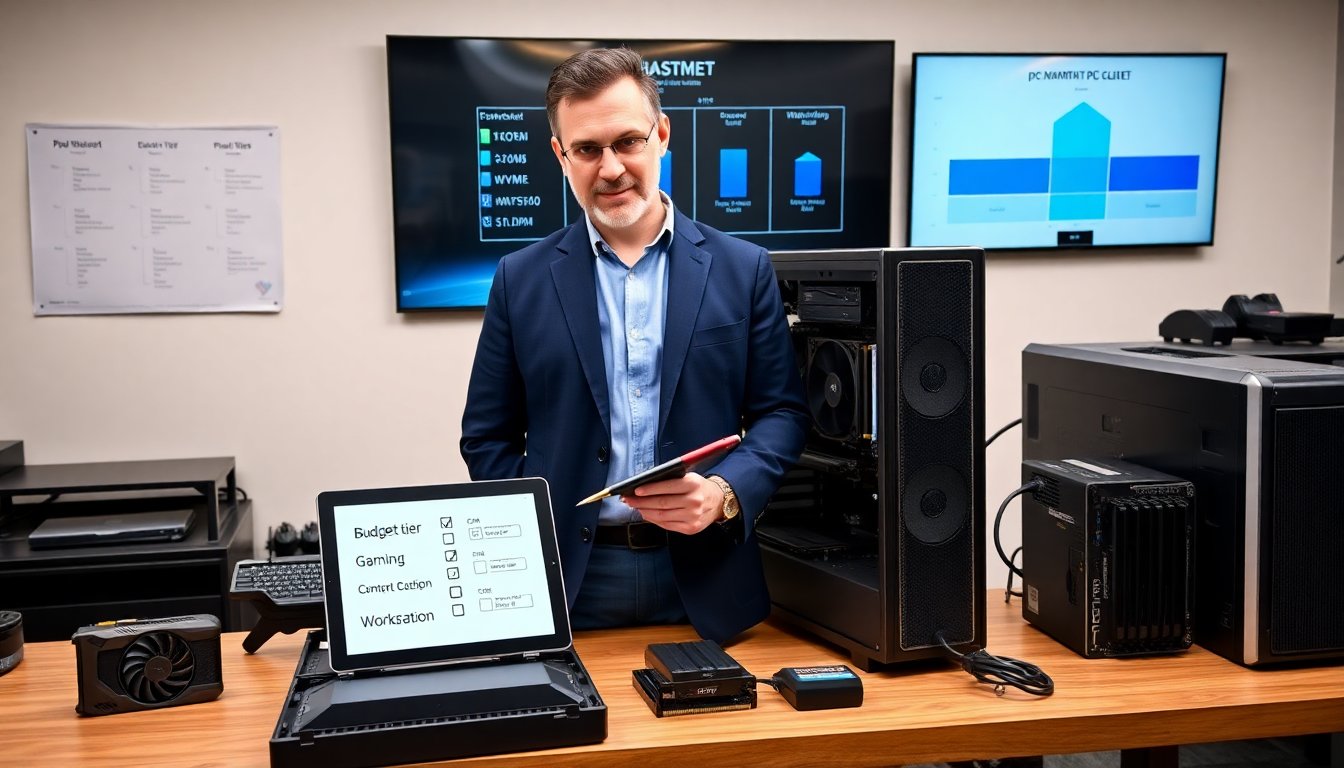
pc mammoth builds wishlist tomtechbloog lists key goals for large-scale desktop builds for 2026. The list sets clear use cases, target budgets, and performance aims. The author states priorities for gaming, content creation, and workstation tasks. The intro prepares readers for concrete component picks and trade-offs in the sections that follow.
Key Takeaways
- PC Mammoth Builds Wishlist TomTechBlooG defines clear 2026 desktop build goals tailored for gaming, content creation, and development use cases.
- Budgets range from $1,200 for solid 1440p gaming to $3,000+ for workstation-level performance, prioritizing GPU, CPU, or RAM based on workload.
- Recommended CPUs scale from 6-core chips for entry builds to 16-core or higher for intensive tasks, paired with GPUs matching resolution and workload demands.
- Motherboards should support PCIe 4.0/5.0, multiple M.2 slots, and robust VRM cooling to ensure performance and future upgrades.
- Memory recommendations include 32GB DDR5 for gamers and 64GB+ with ECC for developers, alongside balanced NVMe and SATA storage solutions.
- Quality cooling, 80+ Gold power supplies with 20-30% headroom, and modular designs enhance reliability and upgrade potential.
Build Goals, Use Cases, And Budget Tiers
pc mammoth builds wishlist tomtechbloog defines three clear build goals for 2026. The first goal targets high-frame-rate gaming at 4K. The second goal addresses heavy video editing and 3D work. The third goal focuses on software development and virtual machines.
They set use cases by workload. Gamers need fast single-thread performance and high GPU throughput. Creators need many CPU cores and fast storage. Developers need high RAM capacity and reliable networking.
They list budget tiers to match goals. The entry tier targets $1,200 to $1,600 and aims for solid 1440p gaming and light content work. The mid tier targets $1,800 to $2,400 and aims for strong 4K gaming and consistent editing performance. The high tier targets $3,000+ and aims for workstation-level multi-threading and GPU compute.
They recommend prioritizing parts by use case. Gamers should assign 35–45% of the budget to the GPU. Creators should assign 30–40% to CPU and 25–35% to GPU. Developers should assign 30–40% to RAM and 20–30% to CPU. They suggest saving for a quality PSU and cooling in all tiers.
pc mammoth builds wishlist tomtechbloog also notes upgrade paths. They prefer motherboards with room for extra memory and additional M.2 slots. They prefer power supplies that exceed current needs by 20% to allow future GPU upgrades.
Core Components: CPU, GPU, And Motherboard Recommendations
pc mammoth builds wishlist tomtechbloog picks clear CPU options for each tier. For the entry tier, they recommend a modern 6-core chip with high single-core clocks. For the mid tier, they recommend an 8-to-12-core chip with strong multi-threading. For the high tier, they recommend a 16-core or higher CPU for heavy rendering tasks.
They choose GPUs by workload. Gamers should select a GPU that reaches target frame rates at the chosen resolution. Creators should pick a GPU with ample VRAM for large timelines and GPU-accelerated effects. Compute-heavy users should pick a GPU with strong CUDA or OpenCL support.
They recommend specific motherboard features. They ask for an AM5 or LGA motherboard with PCIe 4.0 or 5.0 lanes. They want at least two M.2 slots and four DIMM slots. They advise checking VRM cooling and phase count when choosing a board for high-core-count CPUs.
pc mammoth builds wishlist tomtechbloog also instructs on chipset selection. They favor chipsets that enable multiple NVMe drives and USB-C front-panel headers. They advise matching the BIOS feature set to the chosen CPU and future upgrades.
They stress compatibility checks. They recommend verifying CPU socket, RAM speed support, and GPU clearance before purchase. They also recommend confirming that the case supports the chosen motherboard form factor.
Memory, Storage, Cooling, And Power Delivery Choices
pc mammoth builds wishlist tomtechbloog sets memory targets by use case. Gamers should buy 32 GB of DDR5 at a balanced speed. Creators should buy 64 GB or more for multi-layer projects. Developers should buy 64 GB plus ECC when needed.
They recommend storage layouts that balance speed and capacity. They advise a fast NVMe drive for the OS and active projects. They pair that drive with one or more high-capacity SATA drives or slower NVMe drives for bulk storage. They recommend at least one PCIe 4.0 NVMe in mid and high tiers.
They select cooling based on TDP and case airflow. They recommend a quality air cooler for mid-range CPUs. They advise AIO liquid cooling for CPUs with high sustained loads. They require case fans that push and pull air efficiently and recommend a positive pressure setup where possible.
They set power delivery rules to protect components. They advise a power supply with an 80+ Gold rating or better. They recommend a unit with fixed headroom of 20–30% above measured load. They prefer modular PSUs for cleaner builds and better airflow.
pc mammoth builds wishlist tomtechbloog finishes with upgrade advice. They suggest planning for extra M.2 slots and spare SATA headers. They recommend choosing memory and storage that offer clear upgrade paths to extend system life.
Author