
Planting Season Strategy: Aligning Equipment Choices With Business Goals
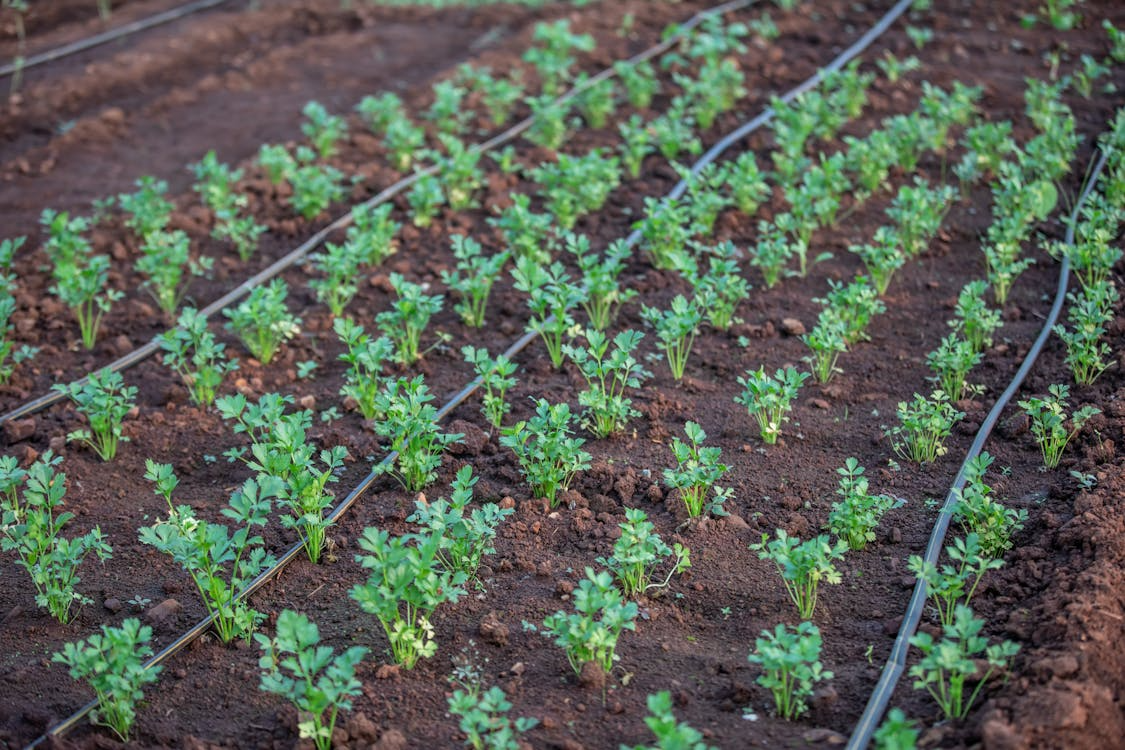
The planting season is the most important window of the year for any operation.
Get the equipment side right and the rest of the season runs smoother. Get it wrong and you’ll spend the next 12 months trying to fix problems that should never have happened. With a solid planting season strategy you can:
- Match your equipment to your actual business goals
- Cut costs without cutting corners
- Set yourself up for a better yield
Here is how to do it…
What you’ll discover:
- Why Equipment Choices Drive Business Outcomes
- Matching Equipment To Your Operation Size
- The Case For Used Precision Disk Drills
- How To Time Your Equipment Investments
Why Equipment Choices Drive Business Outcomes
Every planting season decision is really a business decision in disguise.
The drill behind the tractor is more than just a seed planter. It caps your yield, fuel, labour hours and soil condition. That’s a big bite for one chunk of metal. Many producers don’t make that link early enough.
That’s where used precision disk drills come into play. A properly maintained used drill from the right brand can do just about everything a new one can at a fraction of the price. And if you’re looking for a no till drill that will fit into a no-till or reduced-till system, the used market is where the smart money is often spent. The savings open up money for seed, inputs or other parts of your operation.
You know the drill… Machinery is NOT a “set and forget” investment. It must be aligned with your objectives. A 5,000 acre row-crop operation is vastly different from a 400 acre diversified farm.
So before buying anything, the right questions to ask are:
- What crops are being planted in the next 5 years?
- Is the operation moving toward no-till or staying conventional?
- How many acres need to be covered per day?
- What’s a realistic budget?
Matching Equipment To Your Operation Size
Not every drill is right for every farm.
This seems like a no-brainer, but it’s the #1 error made by growers when formulating a planting season plan. They purchase based on what their neighbour purchased, instead of what their own operation requires.
Let’s break it down by operation type:
Small To Mid-Size Operations (Under 1,000 Acres)
Smaller operations require flexibility. They’re frequently planting multiple crops, working variable terrain, and they don’t have enough acreage to justify a brand-new top-of-the-line machine. A used precision disk drill in the 15-25 foot range tends to be the sweet spot. Precision, without the astronomical price.
Large Operations (1,000+ Acres)
Scale operations demand speed and uniformity. The precision planting market has exploded in recent years, and most of that growth has come from large operations scaling up. At this scale, you need a wider drill and more robust metering systems.
Specialty And Niche Farms
Running cover crops, organics or speciality seed, the priority is getting seed where it needs to be. Disk drills perform best in residue and deliver seed at uniform depths.
The big picture: Adoption of precision agriculture is at 75% of farms nationwide, meaning expectations for accuracy only continue to rise. If you’re still planting with a leaky broadcast seeder, yield loss is going to the farmers who took the time to upgrade.
The Case For Used Precision Disk Drills
Used precision disk drills might be the single best value play in modern farming.
Why? Because precision planting equipment loses value very quickly the first 2-3 years. After that it flattens out the curve. So a 5 year old drill that was bought by the original owner can give you 10+ more seasons of service at maybe 40-60% of the new price.
That’s huge.
Especially considering the fact that no-till now covers 89.4 million acres on 67% of farms nationwide. Disk drills are designed for that reality. They slice through residue, manage variable conditions, and accurately place seed with minimal soil disturbance.
When buying used precision disk drills, here is what to look at:
- Disk wear: Worn disks mean inconsistent depth. Replacements aren’t cheap.
- Bearing condition: Listen for any rough rolling or play in the openers.
- Metering system: Check accuracy and confirm parts are still available.
- Frame condition: Bent frames are deal-breakers. Walk away.
- Service history: A drill with documented service is worth more than one without.
Note: Whenever possible, always test drill in the field. A walk around only tells you so much.
Common Mistakes To Avoid
Buyers’ biggest mistake is to consider price alone. A low cost drill that requires new disks, new bearings, and new metering parts is no longer low cost. Total cost of ownership is far more important than list price.
Second mistake? Purchasing an undersized or oversized drill for your tractor. Don’t over or under match horsepower or you will waste fuel and put excess stress on the machine.
How To Time Your Equipment Investments
Timing matters almost as much as the purchase itself.
As with any resale market, the used equipment market has its cycles. Late fall and throughout the winter is a good time to buy because prices are generally low and most growers are preoccupied with other things. In the spring, demand (and prices) go way up.
Therefore, if planning on buying a major piece of equipment for next year’s planting season, shop in November or December. That is when the best deals will be.
One more tip… Keep an eye on the market in general. The U.S. precision farming market continues to expand year over year. This means there’s new technology entering the market every year. Each time a new model comes out, the previous generation depreciates in price on the used market.
Patient buyers win. Impatient buyers pay full retail.
A few timing rules worth following:
- Plan equipment purchases 6-12 months in advance
- Don’t buy in March or April unless you have to
- Sell or trade old equipment before it loses too much value
- Watch auction calendars in your region for deals
Final Thoughts
Matching equipment decisions with your business plan is the difference between a profitable planting season and one that slowly empties your bank account.
Growers who are winners every year approach equipment buying as a business decision — not an emotional one. They match the machine to the operation, they buy used when it makes sense, and they time their purchases to take advantage of market cycles.
To recap:
- Define your business goals first, then match equipment to those goals
- Look at used precision disk drills before buying new
- Check disk wear, bearings, and metering on every used purchase
- Time your buying decisions to off-season windows
That’s the formula. Follow it and your strategy will reward you for years to come.
Author