
TomTechBlog Social Media Blueprint: Grow Tech Authority And Engagement In 2026
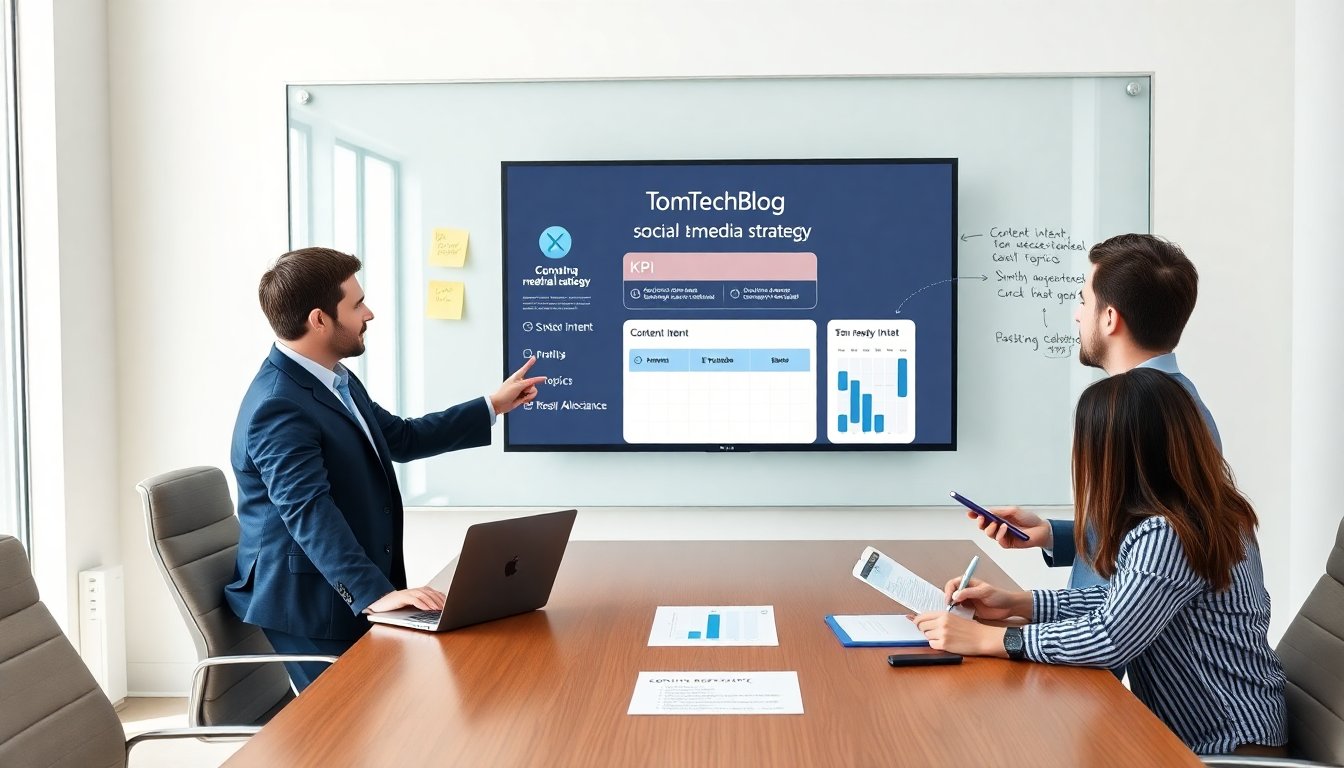
TomTechBlog social media must start with a clear aim. The team must state growth, authority, and engagement goals. The team must name the target readers and describe their tech interests. The team must set numeric targets for followers, traffic, and leads. This plan guides daily posting and measurement.
Key Takeaways
- TomTechBlog social media strategy centers on clear goals like growing engaged followers, boosting domain authority, and increasing referral traffic through targeted numeric targets.
- Defining the target audience segments, such as early-career engineers and product managers, helps tailor content formats and platform use effectively.
- Prioritize platforms X (Twitter), LinkedIn, and YouTube, assigning distinct content roles to each to maximize reach and engagement.
- Use a consistent posting cadence and tone with varied content types including quick insights, threads, tutorials, and case studies to maintain audience interest.
- Measure key performance indicators regularly with a lean toolset, using data-driven experiments and clear success thresholds to iterate and optimize the social media approach.
- Efficiently repurpose content across platforms and maintain a content backlog to ensure a steady, organized publishing schedule aligned with TomTechBlog social media goals.
Define Clear Goals And Target Audience For TomTechBlog
TomTechBlog social media needs specific goals. The team sets three priority goals: increase domain authority, grow engaged followers, and drive referral traffic to long-form posts. They assign numeric targets. For example, gain 4,000 engaged followers in 12 months, lift monthly referral traffic by 30%, and earn five industry backlinks per quarter.
TomTechBlog social media must identify its audience. The team profiles two primary segments: early-career engineers who want practical tutorials, and product managers who want concise analysis. The team lists age range, job titles, tools they use, and main pain points. The team uses surveys, site analytics, and comment analysis to refine profiles.
TomTechBlog social media should prioritize intent. The team maps content to intent: awareness (short explainers), consideration (how-to posts), and conversion (case studies and newsletter signups). They attach a KPI to each intent layer. This mapping helps the team decide which posts aim to build authority and which posts aim to drive traffic or leads.
TomTechBlog social media must adopt a cadence for goal reviews. The team reviews metrics weekly for engagement and monthly for traffic. They adjust targets quarterly based on data. They keep a short list of test ideas and retire low-performing experiments quickly.
Platform Strategy: Which Networks To Prioritize And Why
TomTechBlog social media should focus on three networks first: X (Twitter), LinkedIn, and YouTube. X works for fast commentary and link drops. LinkedIn works for senior readers and long-form threads. YouTube works for tutorials and product explainers. The team adds a lightweight presence on Instagram for short visuals and on Reddit for niche community testing.
TomTechBlog social media must use each platform for a clear role. On X the team posts quick takes, article links, and live event notes. On LinkedIn the team posts case studies, career advice, and repackaged thread content. On YouTube the team posts 6–12 minute tutorials and short clips for snippets.
TomTechBlog social media should match format to user behavior. The team prioritizes LinkedIn when targeting product leaders. The team prioritizes X for timely tech news and community replies. The team prioritizes YouTube when a topic benefits from step-by-step visuals. The team schedules cross-posting with format tweaks rather than exact reposts.
TomTechBlog social media must set budget limits. The team allocates time and ad spend by platform. They reserve most organic effort for LinkedIn and X, and a modest production budget for YouTube. They plan a small paid test on LinkedIn and X to boost high-value posts.
Content Types, Tone, And Posting Cadence (With Example Schedule)
TomTechBlog social media should use four content types: quick insights, long-form threads, tutorials, and case studies. Quick insights deliver news and opinions. Long-form threads explain strategy and steps. Tutorials teach a clear skill. Case studies show real results.
TomTechBlog social media must keep a consistent tone. The team uses clear, direct language. They stay confident and helpful. They avoid hype and jargon. They add a light aside when it fits. They use third person in author bios and post captions when needed.
TomTechBlog social media must set a simple posting cadence. The team uses this weekly schedule:
- X: 3 quick posts per weekday, 1 thread twice a week, rapid replies to comments daily.
- LinkedIn: 3 posts per week (one case study, one article link, one thought piece).
- YouTube: 1 tutorial or explainer per week, plus 2 short clips for socials.
- Instagram: 2 visuals per week focused on quotes or code snippets.
- Reddit: 1-2 community posts per week to test topics.
TomTechBlog social media should reuse content efficiently. The team turns a YouTube tutorial into a LinkedIn article and a multi-part X thread. They extract 3–5 short clips for reels and stories. They adapt headlines and CTAs for each network.
TomTechBlog social media must plan a content backlog. The team keeps ten ready-to-post items and a calendar for two months. They assign owners for production, editing, and publishing. They track performance to inform future topics.
Measure Growth: KPIs, Tools, And How To Iterate Your Social Approach
TomTechBlog social media must measure a short list of KPIs. The team tracks follower growth, engagement rate, click-through rate to articles, referral traffic, newsletter signups, and backlink mentions. They record these metrics weekly and analyze trends monthly.
TomTechBlog social media should use a small toolset. The team uses native analytics on each platform, Google Analytics for referral traffic, and a social dashboard like Buffer or Hootsuite for scheduling and consolidated metrics. They add a simple spreadsheet to log tests and outcomes.
TomTechBlog social media must define success thresholds. The team sets a baseline for each KPI from month one. They mark a win when a post beats the baseline by 25% and a loss when a post performs below 50% of baseline. They treat wins as candidates for scaling and losses as signals to change format or topic.
TomTechBlog social media should run short experiments. The team tests headline variations, post length, and visual styles for two weeks. They test posting times for one week per time slot. They stop tests early if results clearly favor one option.
TomTechBlog social media must document lessons. The team keeps short notes on what worked, what failed, and why. They use those notes to update the content calendar and topic backlog. They repeat successful tests at larger scale and retire formats that do not meet thresholds.
Author